
- Every fourth invoice in Europe is paid late or not at all
- Payment delays and defaults lead to profit losses and higher interest expenses
- As consequence European companies have shortened payment terms
- In Slovenia private customers are only granted 20 days of payment term – the shortest among all countries surveyed
- One in five Slovenian companies feared for its survival due to poor payment practices
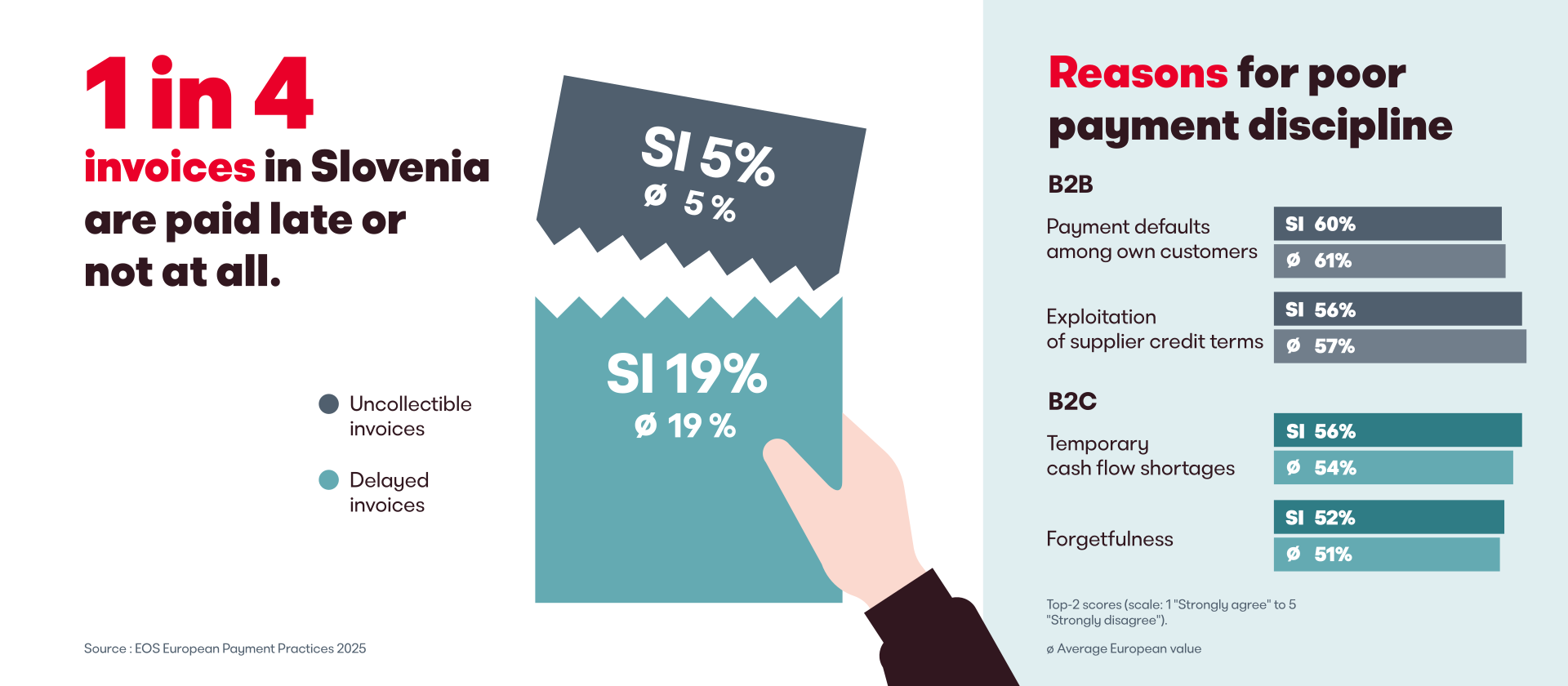
Around 18 billion invoices are issued across the EU every year, but payment morale in Europe is in a bad state: Approximately one in four invoices is paid late (19 percent) or not at all (5 percent). This is shown by the EOS study "European Payment Practices 2025", for which 2,200 financial managers from 11 countries were surveyed.
Compared to other countries, payment morale is highest in Switzerland and Germany. Here, 21 and 22 percent of payments, respectively, were received late or were uncollectible. In Slovenia payment morale is exactly at the European average: 19 percent of payments were made late, and 5 percent of receivables remained unpaid. In Romania, 29 percent of defaulting payers settle their invoices late or not at all. This makes payment morale the worst in a European comparison.
Apparently, many customers consciously accept delayed payment.
European companies primarily cite short-term liquidity bottlenecks of their private customers (54 percent) and forgetfulness (51 percent) as reasons for late payment or even payment default. In Slovenia, temporary liquidity shortages rank first at 56 percent, forgetfulness is rated second (52 percent), long-term over-indebtedness and personal bankruptcy ranks third (49 percent).
For business customers, the main reasons cited on average across Europe are payment defaults by their own customers (61 percent) and the exploitation of supplier credits (57 percent). However, slow, non-digitized processing procedures (48 percent) also likely cause delays, according to the respondents. 43 percent see over-indebtedness and insolvencies of their business partners as the cause of unpaid invoices. In Slovenia, the picture is almost the same: Here, payment defaults by their own customers accounts for 60 percent and the exploitation of supplier credits each for 56 percent. In third place, at 54 percent, there are slow and non-digitalized processing procedures.
Particularly challenging for companies: Some customers apparently do not pay late by mistake. Around a third of companies assume that both business customers (31 percent) and private customers (34 percent) deliberately do not pay their invoices. In Slovenia only 28 respondents suspect deliberate non-payment among their private customers – 6 percentage points below the European average. 31 percent suspect their business customers to delay payments deliberately.
The companies have shortened their payment terms.
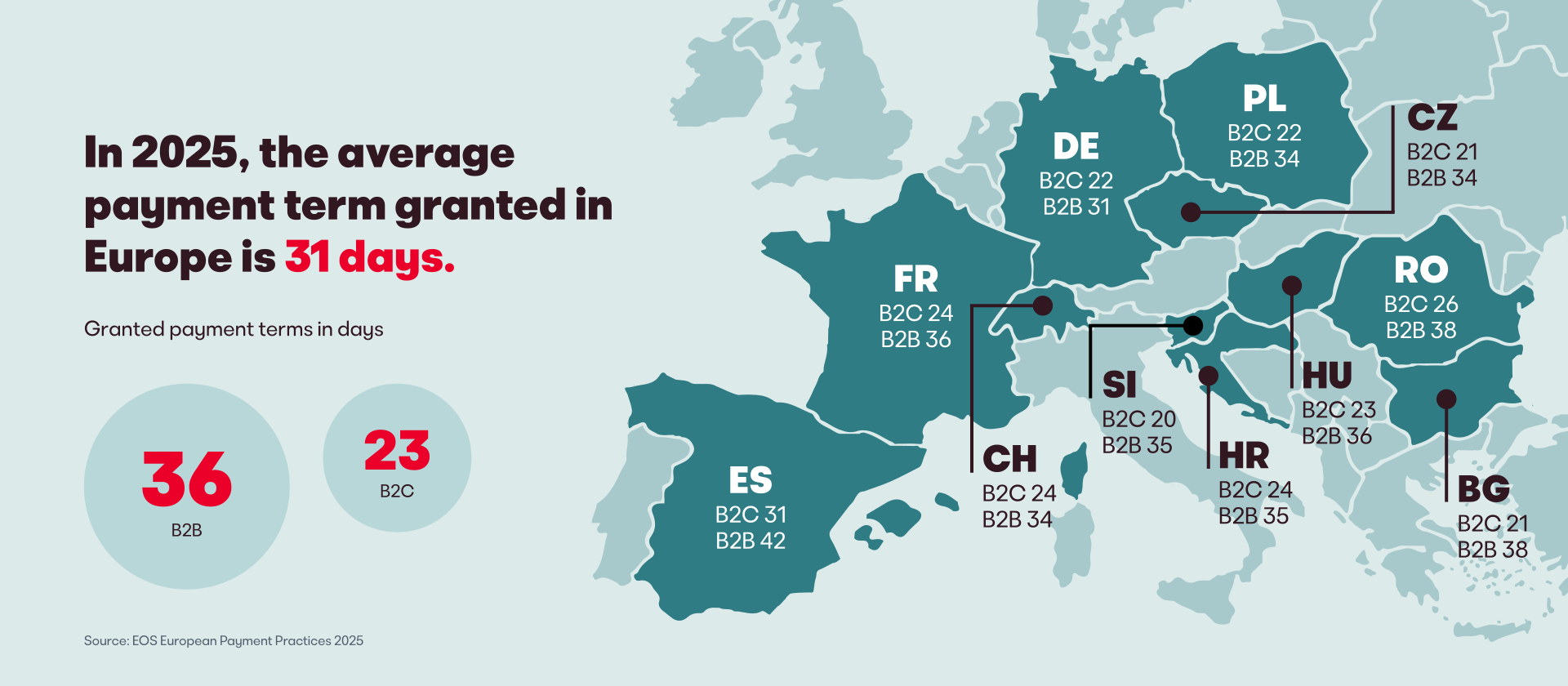
As a result of poor payment morale, European companies grant their customers less time to settle open invoices. At an average of 31 days, the set payment term is at a low in the ten-year trend (business and private customers). In 2015, it was still 34 days, and in 2022, even 37 days.
Private customers in Europe are granted an average of only 23 days to pay. Only Spanish companies are more generous: they allow a comparatively long period of 31 days. In Slovenia private customers are expected to pay their liabilities within 20 days – the shortest payment term among all countries surveyed.
Business customers in Europe have an average payment term of 36 days, thus 13 days longer than private customers, in Slovenia business customers also can expect 35 days.
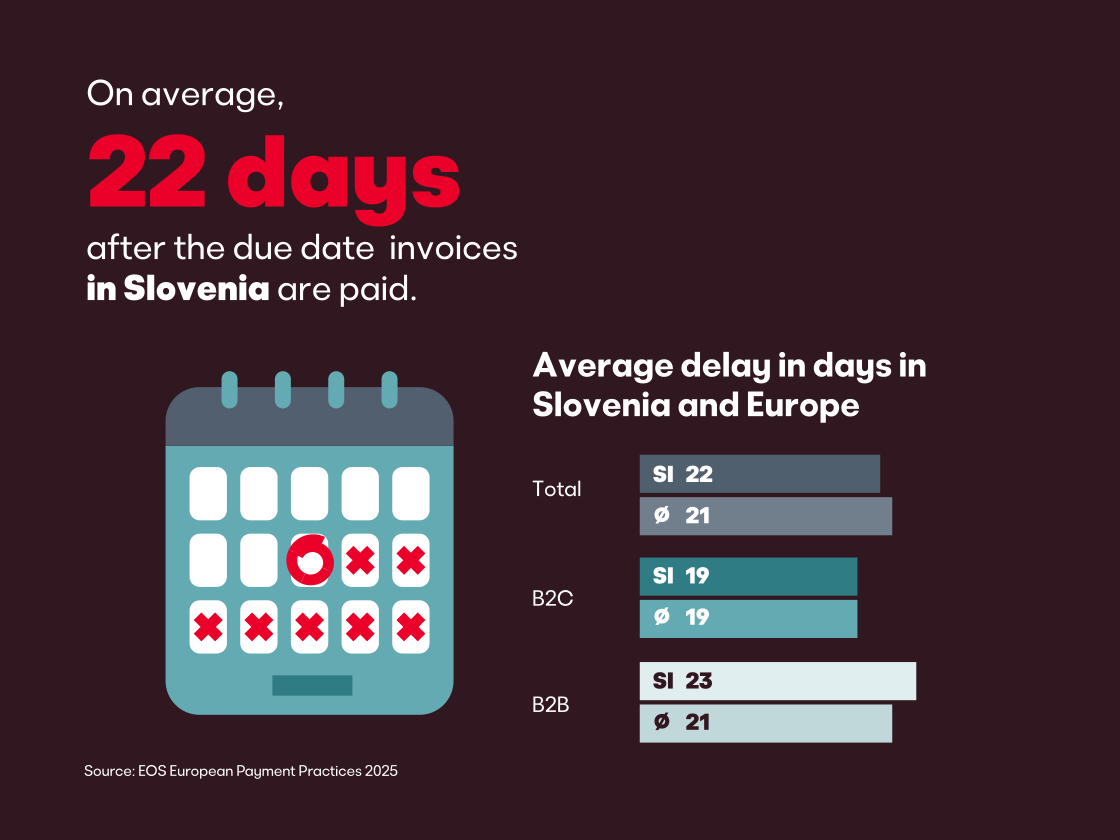
The fact that defaulting private customers pay their invoices on average faster than defaulting business customers probably doesn't play a role here. They settle their invoices on average 19 days, and business customers 21 days, after the payment deadline. In Slovenia, private customers settle their liabilities an average of 19 days after the due date, while business customers take 23 days.
The consequences of poor payment morale for the economy are serious.
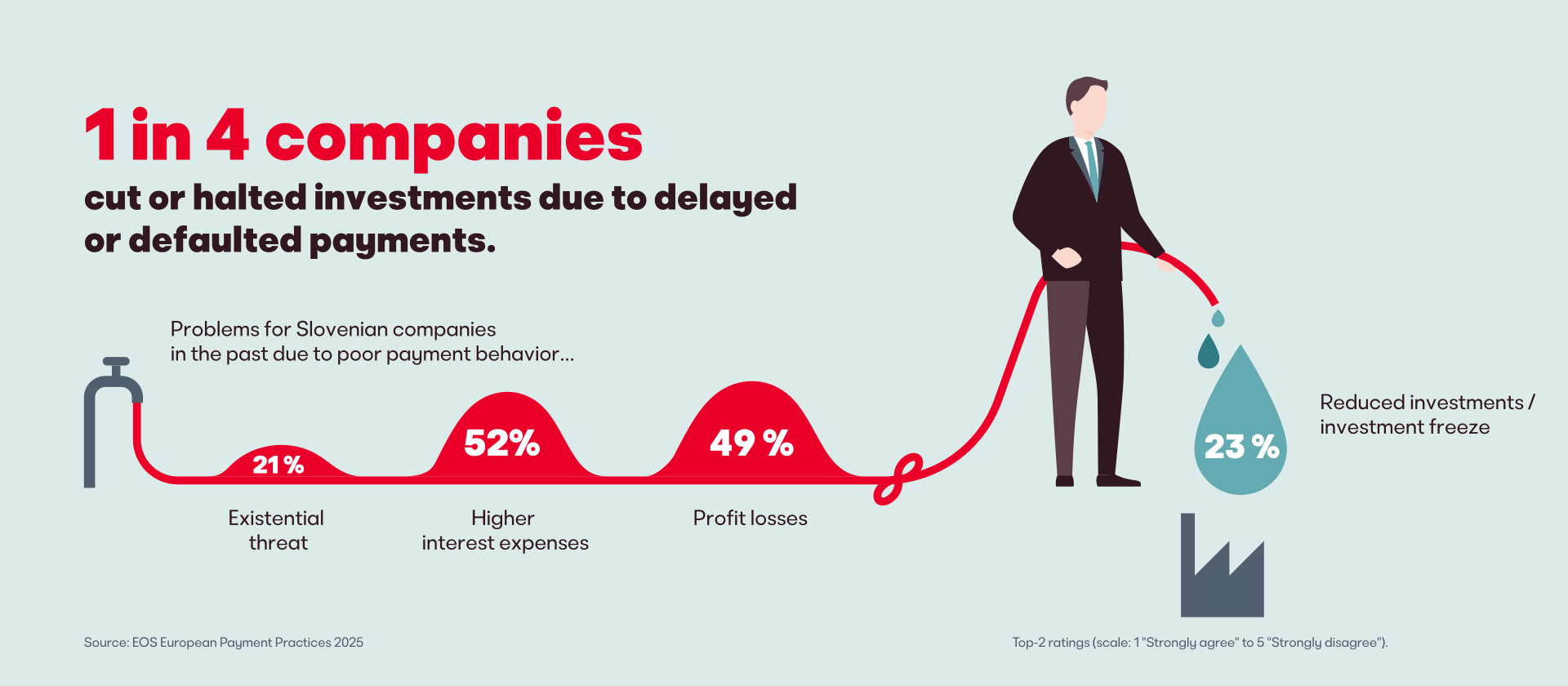
Payment delays and defaults are not without consequences: Almost every second company stated that it had suffered profit losses in the past because of this (48 percent), and 46 percent stated that this led to higher interest costs. For every fifth company (22 percent), investments were cut or halted. In France and Slovenia, every fifth company even had to fear for its existence; the European average is 16 percent. In Slovenia the picture somewhat different: 52 percent face higher interest expenses, 49 percent of respondents report a loss of profits. 34 percent of Slovenian companies said they face liquidity shortfalls. 23 percent of Slovenian companies stated that they reduced investments and 21 percent even feared for their company’s survival – which is, together with France, the highest figure among all countries surveyed.
Eva Griewel, CFO of the EOS Group: "The longer companies have to wait for their money, the more likely it is that the invoice will not be paid at all. In this respect, payment morale is an important indicator for potential payment defaults. If the number of such defaults increases sharply, it can drive creditor companies themselves into insolvency, with the resulting negative effects such as the loss of numerous jobs."
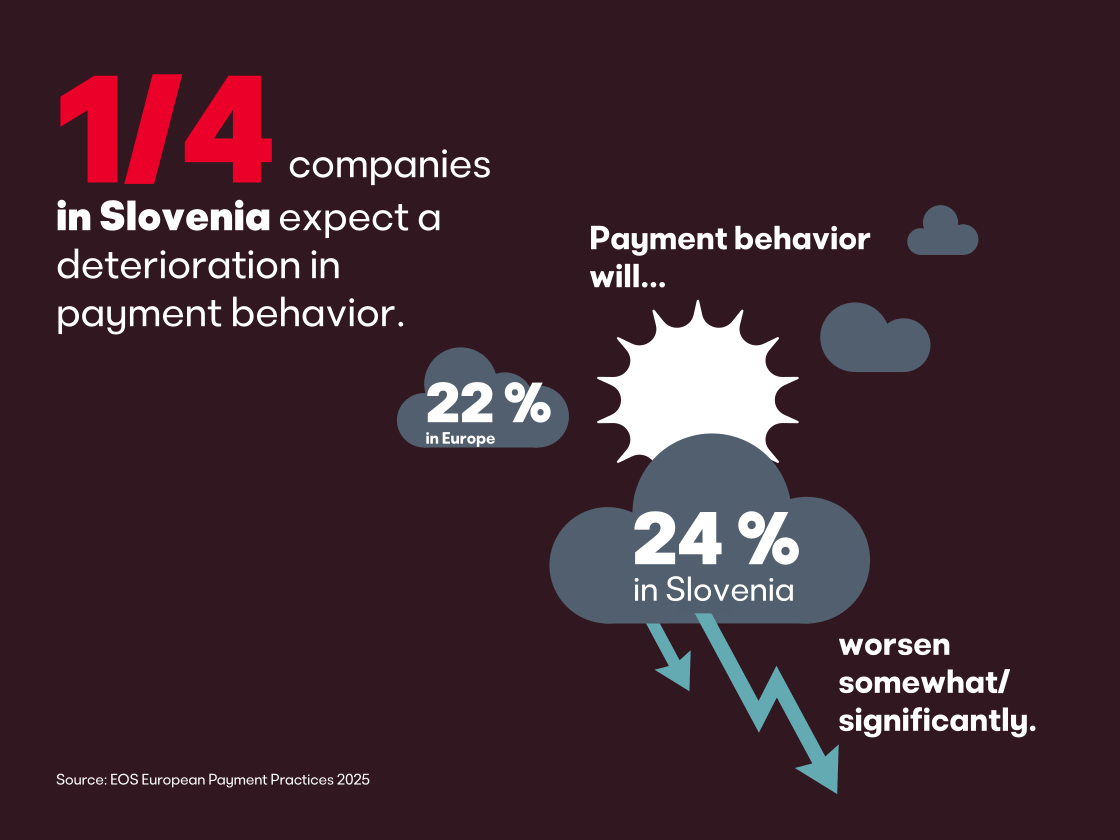
The weak economy offers little hope that payment behavior could improve in near future: Every fifth European company (22 percent) expects to face even more payment delays and defaults in the next two years. Slovenian companies are somewhat more pessimistic than the European average: 24 percent expect their customers’ payment behavior to deteriorate; 13 percent expect improvement. On European level 12 percent of respondents expect payment behavior to improve in near future.
The most pessimistic companies are in Germany and Bulgaria: In these countries, only 8 percent and 9 percent, respectively, believe in an improvement in payment behavior, while 28 percent and 29 percent expect it to deteriorate.
Professional receivables management ensures security.
"Our current study shows that poor payment morale in Europe represents a serious challenge for companies. Although NPL (Non Performing Loans) volumes at banks are currently at a low level overall, we must not underestimate the impact of delayed or outstanding payments. Companies should prepare, because this development places high demands on companies' liquidity management," warns CEO Marwin Ramcke.

For creditors worldwide, receivables management is becoming increasingly complex and riskier, also due to the globally uncertain situation.
The consequences of poor payment morale for creditors can be mitigated with professional receivables management. However, so far only a minority manages their receivables management with external support. Just under a third (30 percent) of companies take a dual approach, handling outstanding payments both internally and through external service providers. In Slovenia, the figure stands at 34 percent and is therefore slightly above the European average. Only 5 percent of Slovenian companies consistently rely on professionals in receivables management – two percentage points below the European average.
Debt collection is increasingly becoming a success factor for many companies.
"For creditors worldwide, receivables management is becoming increasingly complex and riskier, also due to the globally uncertain situation," says Marwin Ramcke. In view of their customers' declining payment morale, companies should therefore carefully weigh the economic risks of payment delays and defaults and consider collaborating with a professional debt collection service provider.
Would you like to learn more about the current EOS study? Please feel free to contact us.

Carina Bonde
Corporate Communications & Marketing
Phone: + 49 173 2979331
Explore more from EOS